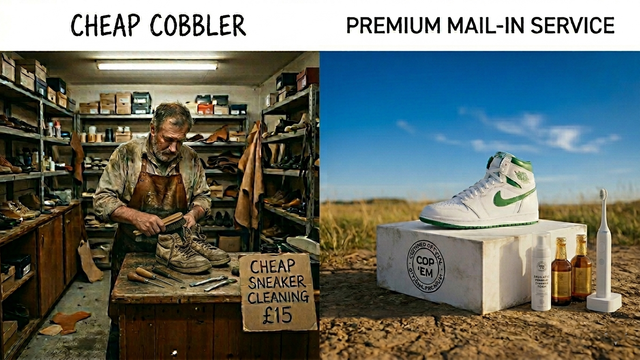
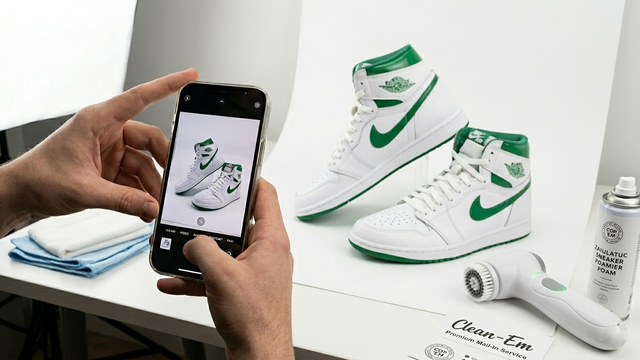
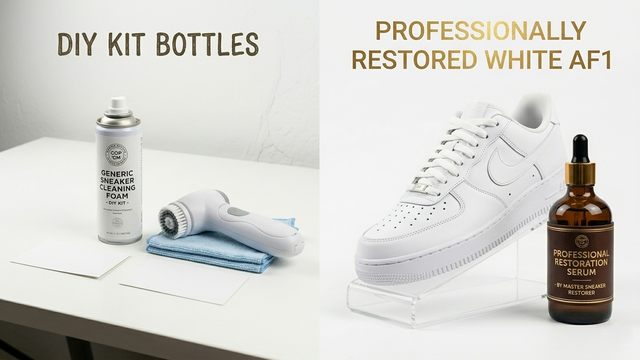
Dry Cleaner vs Specialist Sneaker Cleaner: Which Is Safer?
Why Dry Cleaners and Sneaker Materials Do Not Mix
“Can I drop my trainers at the dry cleaner?” is one of the most common questions we hear. Short answer: usually not worth the risk.
While it is tempting to drop off your battered sneakers along with your suits or winter coats at the local high street shop, the reality is that traditional garment care is fundamentally incompatible with modern athletic and lifestyle footwear. Understanding the mechanics of chemical cleaning reveals why it can easily ruin your favorite pairs.
How Dry Cleaning Works
To understand why shoes are at risk, you have to look at the underlying process of commercial garment care. Dry cleaning uses heavy industrial chemical solvents, most commonly perchloroethylene (known as "perc"), alongside large mechanical tumbling machines.
The entire process is designed for flexible woven textiles like wool, silk, and cotton garments. It is completely engineered without the structural vulnerabilities of multi material footwear in mind, such as heat welded plastic overlays, open cell foam midsoles, or chemically treated delicate suede.
The Core Risks for Modern Footwear
When a multi component sneaker goes through a garment cleaning process, the chemical solvents and tumbling action cause several points of failure:
- Weakened glue and sole separation: Modern trainers rely heavily on heat activated industrial adhesives to bond the upper fabric directly to the rubber soleplate. Dry cleaning solvents aggressively dissolve these glues, leading to sudden sole separation and structurally ruined shoes.
- Stiff suede and heavy color bleed: When delicate suede and nubuck skins are exposed to dry cleaning fluids, the natural oils essential to keeping the leather soft are stripped away. This leaves the panels stiff, brittle, and highly prone to severe color bleeding across contrasting panels.
- Damaged iridescent or painted surfaces: High tech plastic overlays, reflective 3M detailing, and painted midsole accents react poorly to harsh chemical solvents. The chemicals can cause these aesthetic layers to bubble, crack, peel away, or lose their original luster entirely.
What Specialists Do Differently
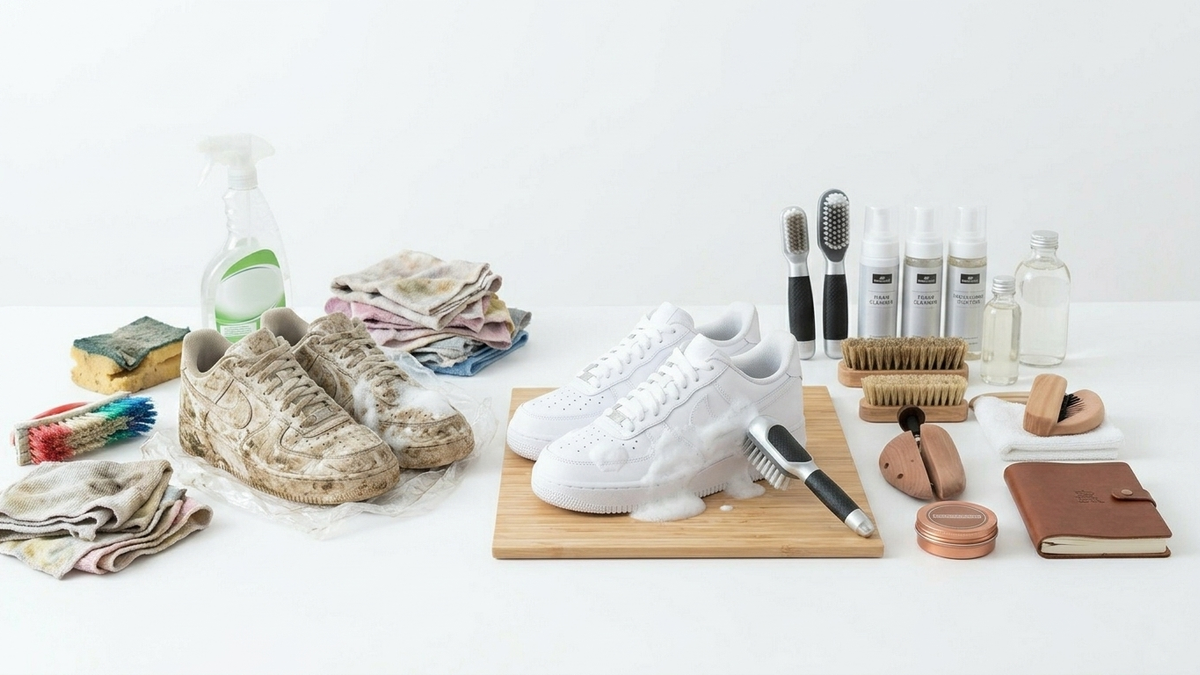
Because footwear contains a mix of organic and synthetic compounds in a single object, it cannot be cleaned uniformly by a machine. Sneaker focused trainer cleaning UK teams match the method directly to the material.
Specialists rely entirely on meticulous hand work to clean uppers panel by panel. They utilize pH neutral, highly controlled products that safely lift dirt without reacting negatively with factory adhesives. They also prioritize advanced internal shape retention and targeted, low moisture odour treatments to thoroughly sanitize the shoes without drowning the interior components in liquids.
When Traditional Cleaning is Acceptable
There is a very narrow exception where traditional high street garment care may suffice. Some smooth, solid leather dress shoes or luxury loafers tolerate professional garment care if the facility offers a dedicated leather handling tier.
Even then, you should always explicitly ask the staff about the specific solvents they intend to use, and never assume the same process is safe for technical mesh like an Air Max knit, or high gloss finishes like Jordan patent leather.
Next Step
Take a moment to look over your footwear collection before sending anything out for care. Separate your simple, unstructured dress shoes from your complex lifestyle trainers and technical runners that require specialized care.
If your collection is dominated by delicate, fuzzy textures, explore our targeted suede cleaning guide to understand how those sensitive skins are safely restored. For a completely risk free refresh, bypass the dry cleaners entirely and use a dedicated UK wide mail in service. Schedule your package today to enjoy a comprehensive flat rate deep clean, completely free tracked postage, and integrated independent authentication for your peace of mind.