How to Clean Suede and Nubuck Trainers Safely
The Master Rules of Suede Care: Preserving the Delicate Nap
Suede is one of the most luxurious materials in footwear, prized for its soft texture and rich color depth. However, it is also the most unforgiving fabric in your wardrobe. Unlike treated leather, suede lacks a protective top layer, meaning its open, fuzzy fibers act like a magnet for dust, raindrops, and liquid spills.
One wrong move with standard household cleaners can permanently ruin the texture, causing the suede to flatten, harden, or develop dark, ugly water marks.
Three Essential Rules for Gentle Suede Care
Maintaining premium suede requires dry, low-friction techniques. If you apply heavy liquid solutions to suede, you risk bleeding the dye and matting down the delicate texture permanently. Adhering to three core guidelines keeps your shoes safe:
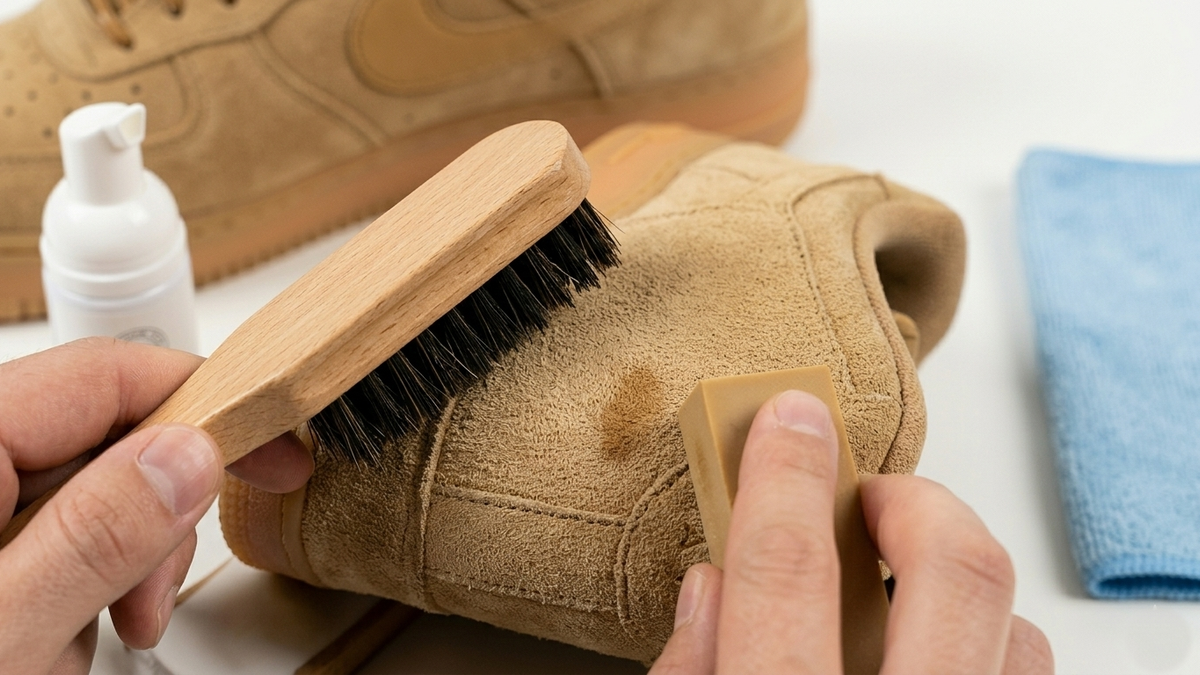
- Use a suede brush, dry sponge, and specialist eraser: These are your primary defense tools. Use a soft-bristled suede brush to dislodge daily dust, a dry crepe sponge to pull away surface dirt, and a specialized rubber suede eraser to gently crumble away targeted scuffs and marks without introducing moisture.
- Never soak suede: Water is the absolute enemy of untreated suede. Flooding the material with liquid causes the natural oils to strip away as it dries, leaving your shoes stiff, shrunken, and discolored.
- Work with the nap, not against it: Suede has a specific direction in which the tiny fibers naturally lay, known as the nap. When brushing your shoes, use gentle, unidirectional strokes that follow this natural flow rather than scrubbing aggressively back and forth, which can tear the delicate fibers.
When to Stop DIY Experiments
While minor surface dust can be managed with a dry brush, heavier contaminants present a serious danger. If your premium suede shoes get splashed with motor oil, dark coffee, or corrosive winter road salt, attempting to scrub them at home with water or kitchen dish soap will almost certainly ruin the pair.
Heavy salt or oil needs professional suede cleaning. Read suede FAQs before home experiments.
Before risking your favorite pairs with unverified internet hacks, it is vital to research how delicate skins react to stains. Checking expert resources helps you avoid catastrophic mistakes. When a complex stain occurs, sending your footwear to a specialized national laboratory provides a safe, uniform restoration. Professional footwear technicians apply precision laboratory methods to revive damaged suede:
- Low-Moisture Extraction: Utilizing specialized, non-aqueous fluid extractors to lift deeply embedded oils and salt crusts out of the skin without flattening the texture.
- pH-Balanced Color Restoration: Safely treating faded or water-damaged panels with fabric-safe conditioning agents to restore the original, deep color saturation.
- Mechanical Nap Realignment: Utilizing industrial suede combs and gentle steaming techniques to raise and soften the flattened fibers, returning the signature velvety texture to your shoes.
Next Step
Stop taking unnecessary risks with your delicate suede footwear collection. Equip your maintenance kit with a proper dry brush and eraser, and remember to keep your pairs completely dry during daily wear.
If you want to understand the exact science of fabric care, take a moment to read through our comprehensive suede FAQs before attempting any home fixes. If your favorite boots or lifestyle trainers are already suffering from heavy salt lines, stubborn grease marks, or flattened texture, visit the dedicated professional suede cleaning platform today to book a secure, tracked mail-in restoration.